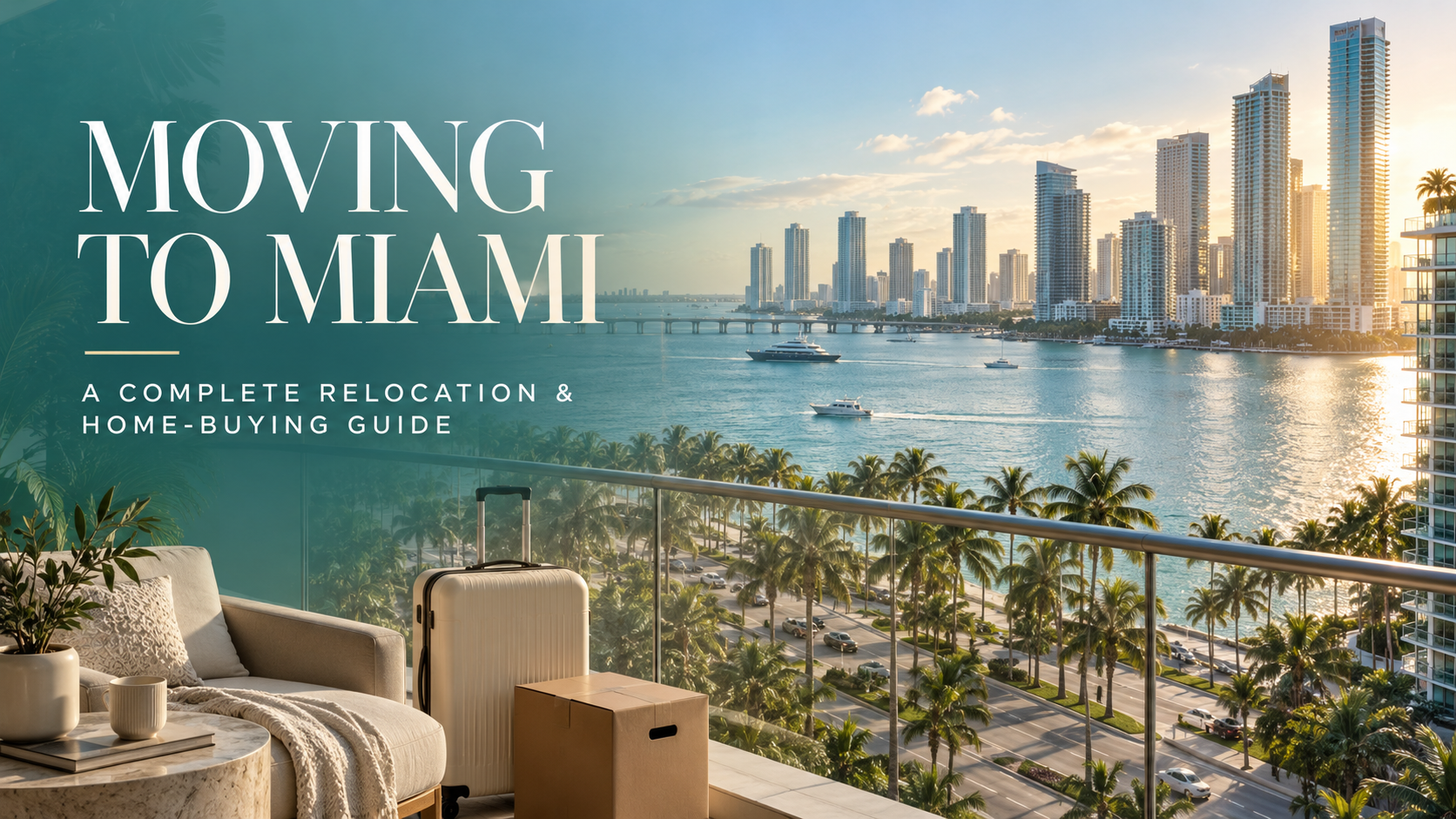
Living in Miami: How to Find the Right Neighborhood and Home
Living in Miami means more than warm weather and beautiful water. It means having access to an international business center, a thriving food and arts scene, year-round outdoor living, distinctive architecture, and residential communities that can feel completely different from one another—even when they are only a few miles apart.
That variety is part of Miami’s appeal, but it can also make choosing a home more complicated. A sleek condominium in Brickell offers a very different daily experience from an oceanfront residence in Sunny Isles Beach, a waterfront home in Miami Beach, or a tree-lined property in Coconut Grove or Coral Gables.
The best place to live in Miami is not simply the neighborhood receiving the most attention. It is the location, property, and community that support the way you want to live every day.
This guide explores several of Miami’s most sought-after residential areas, the differences between condominiums and single-family homes, and the practical factors worth considering before beginning your search.
What Is It Really Like to Live in Miami?
Miami combines the pace and opportunity of an international city with the atmosphere of a tropical destination. Depending on where you live, your daily routine might include walking to restaurants, working from a high-rise overlooking Biscayne Bay, taking a boat out for the afternoon, visiting an art gallery, or spending the morning near the ocean.
The city’s international population shapes nearly every part of life here. Spanish is widely spoken, and Miami maintains strong cultural and business connections with Latin America, the Caribbean, Europe, and the Middle East. Its restaurants, architecture, fashion, music, and events reflect that global character.
At the same time, Miami is not one uniform market. Some areas are highly walkable and energetic, while others are quieter and more residential. Some neighborhoods are centered around the beach or boating, while others offer easier access to business districts, schools, shopping, parks, airports, or major roads.
When comparing homes for sale in Miami, the property itself is only one part of the decision. Your experience will also be shaped by:
Your usual commute and local traffic patterns
Walkability and access to everyday services
Distance from the beach, bay, marinas, parks, or airports
Building amenities and management
Parking and guest-parking options
Association rules and monthly fees
Flood zones, storm preparation, and insurance considerations
Planned construction or development nearby
The difference between weekday and weekend activity
A neighborhood that looks ideal during a brief visit may feel different during rush hour, at night, or during peak season. Visiting more than once can give you a clearer picture of what everyday life will actually be like.
How to Decide Where to Live in Miami
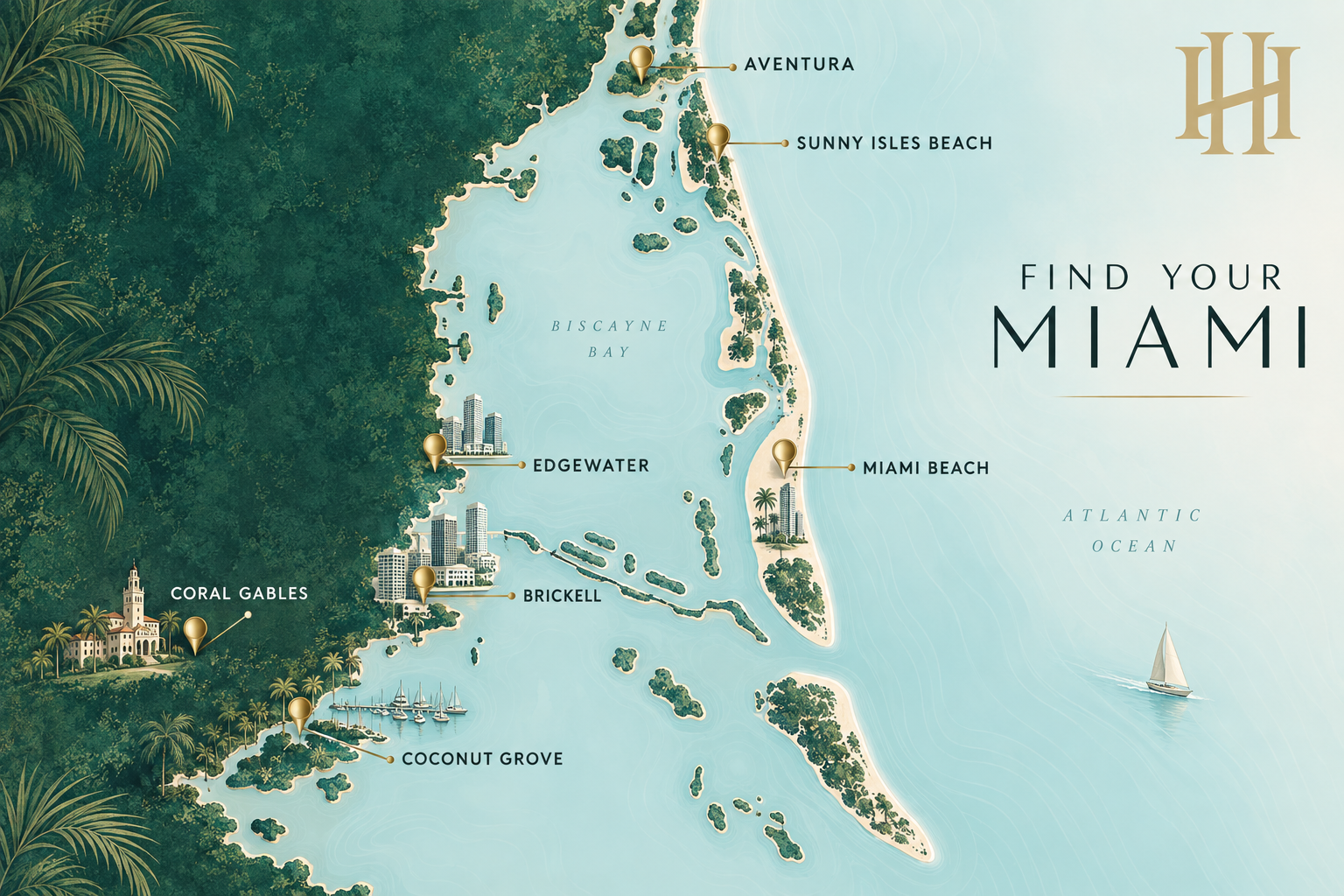
Before focusing on specific buildings or listings, define the experience you want your home to provide.
Consider these questions:
Do you want to walk to restaurants, cafés, shops, and entertainment?
Do you prefer an active urban setting or a quieter residential community?
Is direct ocean access important, or would a bay or skyline view be enough?
Do you need quick access to Miami, Fort Lauderdale, or both?
Would you use boating facilities, a marina, or a private dock?
Do you prefer a new development or an established building with a longer operating history?
How much indoor and outdoor space do you need?
Are you purchasing a primary residence, seasonal home, or investment property?
Which amenities would you genuinely use?
How important are privacy, security, and on-site services?
These answers create a useful lifestyle profile. From there, it becomes much easier to identify the Miami neighborhoods and property types that genuinely fit your priorities.
Miami Neighborhoods to Consider
Brickell: Urban, Modern, and Highly Connected
Brickell is Miami’s financial district and one of the city’s most vertical, energetic residential areas. Luxury condominium towers rise above restaurants, offices, hotels, rooftop venues, and shopping destinations, giving the neighborhood a distinctly urban atmosphere.
For residents who want to walk to coffee, dinner, work, or entertainment, Brickell can be one of Miami’s most convenient options. Many buildings offer resort-style pools, fitness centers, spas, concierge services, valet parking, resident lounges, and impressive views of Biscayne Bay or the city skyline.
Brickell may be a good fit if you want:
High-rise condominium living
Strong walkability
Easy access to Downtown Miami
Restaurants, shopping, and nightlife nearby
Extensive building amenities
A polished, metropolitan environment
Buyers should compare more than finishes and views. Traffic, nearby construction, parking arrangements, association fees, building management, and the position of a unit within the tower can all affect the ownership experience.
Edgewater: Bayfront Living Near Miami’s Cultural Districts
Edgewater sits along Biscayne Bay just north of Downtown Miami. Its waterfront location and central position place residents near Wynwood, Midtown, the Design District, Miami Beach, and the city’s main business and cultural areas.
The neighborhood is known primarily for condominium living, including established towers and newer developments. Many residences offer broad bay views and access to waterfront parks, while the overall atmosphere can feel more residential than the center of Brickell.
Edgewater may suit buyers who want:
Biscayne Bay views
Central access to several major neighborhoods
A condominium-focused residential environment
Proximity to arts, dining, shopping, and design
New-development options
Because the area continues to evolve, it is important to understand nearby development plans, construction timelines, view corridors, and how future buildings could affect a particular residence.
Aventura: Refined Residential Living Between Miami and Fort Lauderdale
Aventura offers a polished environment with luxury condominiums, shopping, dining, parks, golf, and access to both Miami-Dade and Broward County. Its location can be especially appealing to residents whose lives extend across South Florida rather than remaining centered in Downtown Miami.
The area includes established condominium communities, newer towers, gated properties, and residences overlooking the Intracoastal Waterway, golf courses, or the city. Aventura Mall is a major local destination, while nearby roads provide connections to Sunny Isles Beach, Bal Harbour, Hollywood, and Fort Lauderdale.
Aventura may be a strong choice if you want:
A residential setting with urban conveniences
Luxury shopping and dining nearby
Access to both Miami and Fort Lauderdale
Established condominium communities
Parks, walking paths, golf, and waterfront views
A wide range of residence sizes and building styles
When comparing Aventura properties, consider the age and financial condition of the building, current or planned assessments, traffic at the times you travel most, and the level of renovation within the individual unit.
Sunny Isles Beach: Oceanfront Towers and Resort-Style Living
Sunny Isles Beach is a narrow barrier-island community positioned between the Atlantic Ocean and the Intracoastal Waterway. It is recognized for its oceanfront skyline, luxury residential towers, direct beach access, and expansive water views.
Properties range from established condominiums to newer ultra-luxury developments with private elevators, large terraces, beach service, pools, spas, fitness facilities, and high-touch resident services. Some buildings feel like private resorts, while others offer a more traditional residential experience.
Sunny Isles Beach may appeal to buyers looking for:
Direct access to the ocean
Full-service luxury buildings
Large residences and terraces
Ocean, Intracoastal, or skyline views
A second home or seasonal residence
Proximity to Aventura and Bal Harbour
Buyers should compare not only asking prices but also association costs, rental policies, valet and parking arrangements, beach access, building services, and the financial responsibilities connected with maintaining an oceanfront property.
Miami Beach: Distinct Communities Surrounded by Water
Miami Beach is not a single residential experience. South Beach offers activity, nightlife, historic Art Deco architecture, and strong walkability. Mid-Beach includes luxury hotels, modern condominiums, and quieter residential pockets. North Beach generally has a more relaxed atmosphere, with its own mixture of condominiums, smaller buildings, parks, and beach access.
Away from the main avenues, Miami Beach also includes waterfront homes, gated islands, historic residences, and contemporary estates. For some buyers, the main attraction is walking to the ocean. For others, it is privacy, boating access, architecture, or proximity to restaurants and cultural destinations.
Miami Beach may work well if you value:
Proximity to the beach and water
Walkable pockets with dining and entertainment
Historic and contemporary architecture
Oceanfront condominiums or waterfront homes
A recognizable Miami lifestyle
Important factors include flood and insurance considerations, bridge access to the mainland, seasonal traffic, short-term-rental restrictions, parking, and the maintenance demands of coastal property.
Coconut Grove: Green, Established, and Close to the Bay
Coconut Grove is one of Miami’s oldest communities and is known for its mature landscaping, marinas, waterfront parks, winding streets, and relaxed character. The area blends long-established homes with contemporary residences, townhomes, boutique condominiums, and newer luxury towers.
Its village center offers restaurants, shopping, and gathering spaces, while the surrounding residential streets can feel secluded and lush. Buyers are often drawn to the Grove for its connection to nature and the bay, as well as its proximity to Coral Gables, Brickell, and Downtown Miami.
Coconut Grove may be a good match if you want:
A green, established neighborhood
Marinas and access to Biscayne Bay
A mixture of condominiums and single-family homes
Restaurants and shops in a village-style center
Convenient access to central Miami
Architecture with more individual character
Property elevations, tree coverage, lot conditions, renovation quality, traffic flow, and the boundary between different sections of the Grove are worth examining carefully.
Coral Gables: Architecture, Elegance, and Lasting Character
Coral Gables is known for Mediterranean-inspired architecture, landscaped streets, established residential areas, dining, shopping, golf, and a strong sense of place. Housing ranges from condominiums near the urban core to single-family homes, gated communities, and waterfront estates.
The city has a more traditional residential atmosphere than Miami’s high-rise waterfront districts. Many buyers are drawn to its architectural identity, central location, and access to Coconut Grove, Brickell, the airport, and other parts of Miami-Dade County.
Coral Gables may appeal to buyers seeking:
Single-family homes and established streets
Distinctive architecture
A refined, residential atmosphere
Shopping and dining nearby
Access to golf, parks, and waterfront enclaves
A central location without high-rise city living
Buyers considering older homes should evaluate renovation history, roofs, electrical and plumbing systems, storm protection, permitting, insurance, and ongoing maintenance needs.
Other Miami Areas Worth Exploring
Your ideal match may also be outside the best-known luxury neighborhoods. Depending on your budget and priorities, it may be useful to explore Downtown Miami, Key Biscayne, Bal Harbour, Bay Harbor Islands, Surfside, North Miami Beach, Miami Shores, Pinecrest, or other communities throughout Miami-Dade County.
The goal is not to select a neighborhood based only on reputation. It is to compare how each area aligns with your preferred pace, travel patterns, property type, and long-term plans.
Condominium or Single-Family Home?
One of the most important choices when buying a home in Miami is whether a condominium or single-family property better suits your lifestyle.
Advantages of Condominium Living
A condominium may provide:
Building security, controlled access, and concierge services
Pools, fitness centers, spas, resident lounges, and shared workspaces
Professional management of common areas
Central, bayfront, or oceanfront locations
Less personal responsibility for exterior maintenance
Services such as valet parking, package management, or beach access
The ability to close the door and leave more easily when traveling
However, condominium ownership also involves shared expenses and rules. Before purchasing, buyers should review the condominium documents, financial statements, reserve information, budgets, insurance, meeting records, pending litigation when applicable, rental restrictions, pet rules, and any existing or proposed special assessments.
The monthly fee should be considered in context. A higher fee may include substantial services, utilities, staffing, or reserves, while a lower fee does not automatically mean lower long-term ownership costs.
Advantages of a Single-Family Home
A single-family home may offer:
Greater privacy
More interior and outdoor space
A private pool, garden, garage, or dock
More control over renovations and how the property is used
Fewer shared-building rules
Space for guests, a home office, or long-term household needs
Homeownership also places more responsibility directly on the owner. Roofs, landscaping, pools, seawalls, docks, security, pest control, storm preparation, and major mechanical systems may all require ongoing attention.
For waterfront homes, buyers may need additional inspections and research relating to docks, seawalls, water depth, bridge clearances, flood exposure, and permitting.
New Development or Resale Property?
Miami offers both new-construction opportunities and resale homes in established buildings and communities.
New developments may attract buyers with contemporary design, modern building systems, updated amenities, flexible deposit schedules, and the opportunity to select a residence before completion. Buyers should review the developer’s track record, contract terms, projected fees, estimated completion timeline, deposit requirements, and what is included with the residence.
Resale properties allow buyers to inspect the actual home, building, views, amenities, and surrounding area. An established property may also provide more operating history, making it easier to examine prior budgets, maintenance patterns, assessments, and building management.
Neither choice is automatically better. The right option depends on your timeline, tolerance for uncertainty, financing needs, design preferences, and long-term goals.
What Does It Cost to Own a Home in Miami?
The purchase price is only the beginning of the ownership calculation. A realistic budget should also account for expenses that may include:
Property taxes
Homeowners or condominium insurance
Flood insurance when applicable
Condominium or homeowners association fees
Special assessments
Utilities and internet
Parking, valet, storage, or marina fees
Pool, landscaping, and exterior maintenance
Repairs, reserves, and future improvements
Closing costs and financing expenses
For an accurate comparison, evaluate the total monthly and annual cost of each property—not just the asking price or mortgage payment. Two homes with similar prices can have very different ownership costs.
Important Due Diligence Before You Buy
Miami’s climate, coastal location, and variety of property types make careful due diligence especially important.
Depending on the property, your review may include:
A professional home or condominium inspection
Building financials, reserves, and association documents
Current and planned special assessments
Insurance availability and estimated premiums
Flood-zone and elevation information
Roof, window, electrical, plumbing, and air-conditioning condition
Storm protection and impact-resistant openings
Permits and renovation records
Rental, pet, parking, and guest restrictions
Nearby construction and development plans
Seawall, dock, or waterfront inspections
The property’s actual commute at relevant times of day
Your real estate agent, attorney, lender, insurance professional, inspector, and other qualified advisers can each help evaluate a different part of the purchase.
Buying a Primary Home, Seasonal Residence, or Investment
Your intended use should guide the search from the beginning.
A primary residence may place greater importance on commuting, storage, day-to-day convenience, parking, and access to services. A seasonal buyer may prioritize security, building management, amenities, and the ability to leave the property unoccupied. An investor may focus on rental policies, demand, expenses, management, and the restrictions of a particular building or municipality.
If you hope to use a home in more than one way—for example, enjoying it seasonally and renting it at other times—confirm that the building and local rules support that plan before purchasing. Rental requirements vary widely and should never be assumed.
Begin With the Life You Want
The most productive Miami property searches begin with clarity. Instead of opening dozens of listings across unrelated areas, first decide what matters most and which compromises you are willing to make.
You may discover that you prefer a smaller residence in a highly walkable neighborhood, a larger home farther from the urban core, an established building with a strong operating history, or a new development with modern finishes and amenities.
Once your lifestyle, budget, timing, and property preferences are defined, Miami’s large real-estate market becomes far easier to navigate.
Frequently Asked Questions About Living in Miami
What are the best Miami neighborhoods?
There is no single best neighborhood for every buyer. Brickell may appeal to someone seeking urban walkability, while Sunny Isles Beach offers oceanfront tower living. Aventura provides access to both Miami and Fort Lauderdale, and Coconut Grove or Coral Gables may appeal to buyers who prefer established residential streets and single-family homes. The best choice depends on your daily routine, budget, preferred property type, and connection to the water.
Is Miami a good place for a second home?
Miami offers many features that can appeal to second-home buyers, including warm weather, direct international travel connections, waterfront living, cultural activities, and full-service condominium buildings. Buyers should compare ongoing ownership costs, insurance, building rules, and how the property will be managed while they are away.
Should I buy a condo or house in Miami?
A condo may suit buyers who want amenities, security, central locations, and lower exterior-maintenance responsibilities. A house may be better for buyers prioritizing privacy, outdoor space, a private pool or dock, and greater control over the property. The right choice depends on both lifestyle and total ownership costs.
What should I check before buying a Miami condo?
Review the association’s budget, reserves, insurance, fees, rules, recent meeting records, maintenance history, pending assessments, rental restrictions, and any relevant legal or structural matters. A qualified attorney and inspector can help you evaluate the documents and physical condition of the property.
How do I begin searching for homes for sale in Miami?
Start by defining your budget, preferred neighborhoods, property type, space requirements, timing, and intended use. A focused consultation can then turn those priorities into a personalized shortlist instead of an overwhelming list of unrelated properties.
Find Your Place in Miami
The right Miami home should support both your practical needs and the experience you want from the city. Local guidance can help you compare neighborhoods, buildings, new developments, ownership costs, and available properties with greater clarity.
Find a Home That Fits Your Lifestyle
Tell me what you want from living in Miami, and I’ll create a personalized property shortlist based on your preferred location, budget, property type, timing, and lifestyle.
Real estate information is provided for general educational purposes and may change. Buyers should independently verify property details, association information, insurance, taxes, zoning, rental rules, and other material facts with the appropriate qualified professionals.