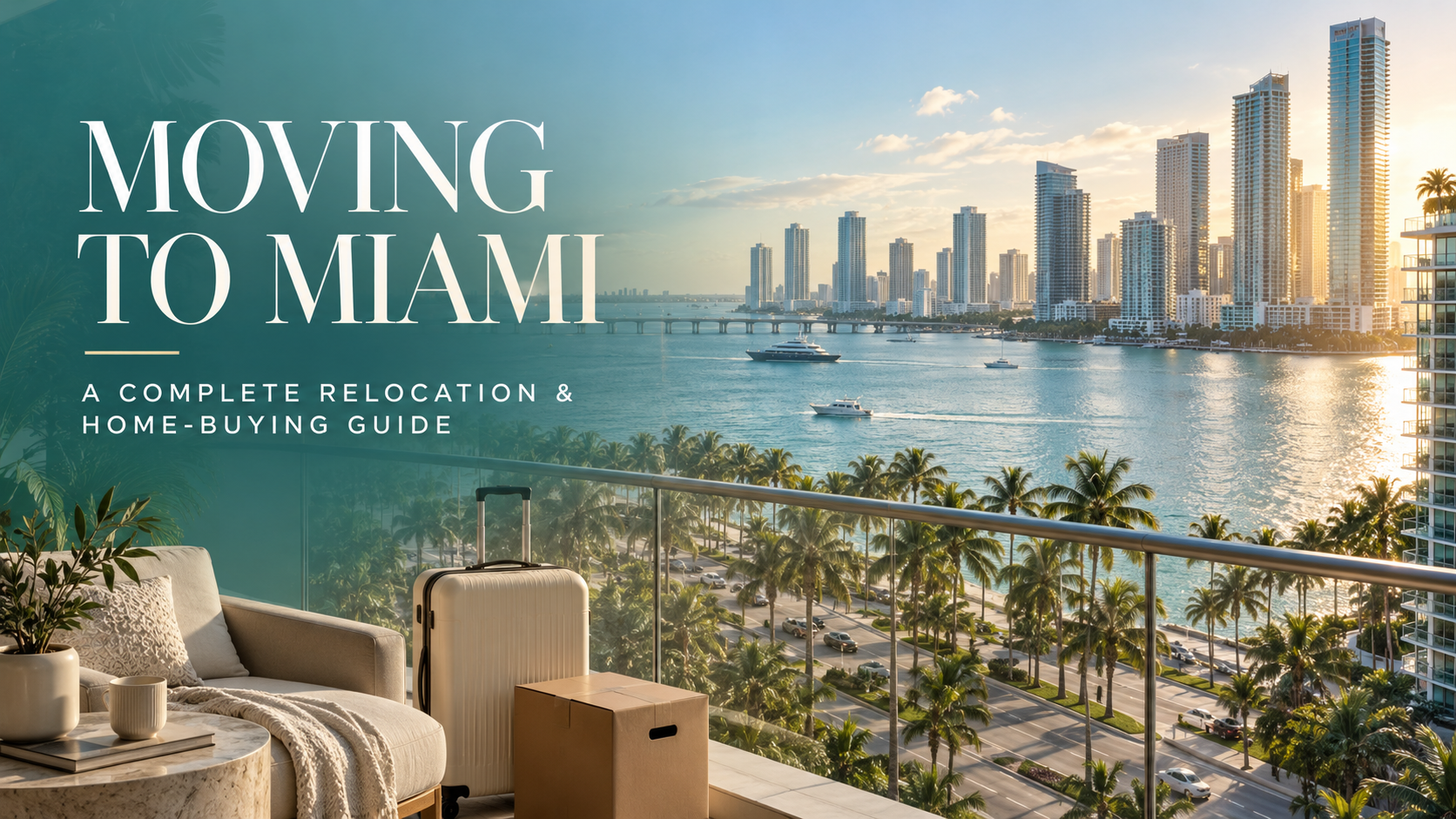
Moving to Miami can mean much more than changing your address. It may involve a new climate, a different pace of life, an international community, year-round access to the outdoors, and a housing market unlike the one you are leaving behind.
Miami offers everything from oceanfront condominiums and resort-style high-rises to gated communities, historic homes, modern townhouses, and family residences with private outdoor space. The region also includes growing business districts, internationally recognized restaurants, beaches, marinas, cultural destinations, and residential neighborhoods with distinctly different personalities.
That variety is one of Miami’s greatest advantages—but it can also make relocating to Miami feel overwhelming.
The right neighborhood will affect much more than how your home looks. It can influence your commute, insurance costs, access to the water, walkability, parking, building expenses, and everyday routine. A successful relocation therefore begins with a clear strategy—not a random collection of attractive listings.
This Miami relocation guide will help you compare areas, understand housing costs, decide whether to rent or buy, and prepare for a more confident move.
What to Consider Before Moving to Miami
Before looking at properties, begin with the practical details of your everyday life. A home can be beautiful and still be wrong for your routine.
Ask yourself:
Where will you work, study, or conduct business?
How often will you need to commute?
Do you want an active urban environment or a quieter residential setting?
Is walkability important to you?
Will you have a car, and how many parking spaces will you need?
Do you prefer the ocean, bay, Intracoastal, marina, or an inland neighborhood?
Would you rather own a condominium, townhouse, or single-family home?
Do you want a seasonal residence or a year-round home?
Which building services and amenities would you realistically use?
Do you need pet-friendly housing?
Are rental flexibility or investment potential important?
Are you prepared to buy immediately, or would you prefer to rent first?
These answers help create a focused search and eliminate properties that do not support your lifestyle.
For example, someone commuting daily may prioritize highway access and predictable travel time, while a remote professional may value waterfront views, amenities, and access to restaurants. A buyer who travels frequently may prefer the convenience of a staffed condominium, while someone seeking privacy and outdoor space may be happier in a single-family home.
Choosing Where to Live in Miami
Miami is not one uniform market. Even neighborhoods located near one another can offer completely different experiences.
When deciding where to live in Miami, consider the atmosphere during the day and at night, weekday traffic, nearby development, parking, access to essential services, and the type of housing available.
Brickell and Downtown Miami
Brickell and Downtown Miami appeal to residents seeking a high-rise urban lifestyle. The area offers access to offices, restaurants, entertainment, public transportation, and condominium buildings with extensive amenities.
Brickell is particularly popular with professionals and international buyers who want to be close to Miami’s financial and business district. Downtown provides access to cultural attractions, sports and entertainment venues, government offices, and waterfront areas.
When comparing buildings, look beyond the amenities. Consider:
Monthly association fees
Parking arrangements
Guest access
Traffic at peak hours
Nearby construction
Building reserves and financial condition
Rental restrictions
The actual walking distance to groceries, work, and daily services
A building that appears conveniently located on a map may feel different once traffic patterns and entrance access are considered.
Edgewater, Midtown, and the Design District
Edgewater, Midtown, and the Miami Design District provide central access to dining, shopping, art, and entertainment, but each area has a different character.
Edgewater is known primarily for bayfront condominium living, water views, and proximity to Margaret Pace Park. Midtown offers a compact mixed-use environment with residences, stores, restaurants, and services nearby. The Design District is recognized for luxury retail, architecture, galleries, and high-end dining.
These neighborhoods may appeal to buyers who want to be near Miami’s urban core without living directly in Downtown or Brickell.
When evaluating Edgewater properties, pay attention to the direction of the view, future development sites, balcony exposure, traffic, and construction plans that could affect the surroundings.
Aventura
Aventura offers a more residential setting while maintaining convenient access to shopping, restaurants, medical services, parks, golf, and major roads connecting Miami-Dade and Broward counties.
Housing options include established condominiums, newer luxury developments, townhouses, and nearby waterfront communities. The area may work well for residents who want access to both Miami and Fort Lauderdale, although commute times should be evaluated carefully.
Because Aventura contains buildings from different periods, buyers should compare renovation history, association finances, assessments, amenities, insurance obligations, and hurricane-protection features.
Sunny Isles Beach
Sunny Isles Beach appeals to buyers seeking direct ocean access, luxury condominium living, water views, and resort-style amenities. The city includes both established buildings and newer high-rise developments.
The experience can vary significantly from one building to another. Before buying, compare:
Building age and condition
Monthly association fees
Financial reserves
Special assessments
Insurance requirements
Valet and self-parking options
Beach services
Pet rules
Rental policies
Guest and occupancy restrictions
An oceanfront location can be highly desirable, but the complete ownership cost should be reviewed before determining whether a residence fits your budget.
Miami Beach
Miami Beach offers direct access to the ocean, but it is made up of several distinct areas.
South Beach provides a lively environment with restaurants, nightlife, historic architecture, and strong walkability in certain locations. Mid-Beach combines hotels, condominiums, and quieter residential pockets, while North Beach generally has a more relaxed neighborhood atmosphere.
Buyers should consider traffic between Miami Beach and the mainland, parking, flood exposure, insurance, nearby tourism activity, and the condition of older condominium buildings.
If you plan to commute regularly, test the route during the times you would normally travel rather than relying only on a mapping application.
Coral Gables and Coconut Grove
Coral Gables and Coconut Grove offer established residential environments with mature landscaping, shopping, restaurants, marinas, condominiums, townhouses, and single-family homes.
Coral Gables is known for distinctive architecture, tree-lined streets, commercial districts, and residential communities ranging from historic homes to waterfront estates. Coconut Grove offers a lush atmosphere, access to Biscayne Bay, marinas, dining, and a mixture of established residences and new luxury construction.
When considering an older home, evaluate the roof, plumbing, electrical system, windows, foundation, drainage, insurance eligibility, and previous renovations. Historic charm can be appealing, but it may also require a more detailed inspection and maintenance plan.
Other Miami Areas to Explore
Depending on your budget and priorities, your search may also include:
Key Biscayne
Bal Harbour
Bay Harbor Islands
Surfside
North Miami Beach
Miami Shores
Upper Eastside
South Miami
Pinecrest
Kendall
Doral
The best choice is not necessarily the most famous neighborhood. It is the area that gives you the right combination of housing, location, ownership costs, and daily convenience.
Miami Condominiums Versus Single-Family Homes
One of the first decisions when moving to Miami is whether condominium or single-family-home ownership better fits your lifestyle.
Condominium Living
A condominium may provide:
Staffed entrances or security
Pools, fitness centers, and shared amenities
Exterior building maintenance
Convenient locations
Lock-and-leave flexibility
Waterfront or skyline views
However, buyers must account for association fees, building rules, financial reserves, insurance responsibilities, special assessments, renovation restrictions, and application procedures.
You are not only purchasing an individual unit. You are also becoming financially connected to the condition and management of the building.
Single-Family-Home Living
A single-family home may provide:
More privacy
Private outdoor space
Greater control over renovations
Additional parking
Room for children, pets, guests, or a home office
That control comes with additional responsibilities. Homeowners may need to budget for landscaping, pool service, pest control, security, roof maintenance, exterior repairs, storm preparation, drainage, and higher maintenance reserves.
Neither property type is automatically better. The right choice depends on how you want to live and how much responsibility you want to manage.
Understanding the Complete Cost of a Miami Property
The advertised purchase price or monthly rent tells only part of the story.
Before making an offer, estimate the property’s complete monthly and annual cost.
Condominium buyers should account for:
Mortgage principal and interest, if financed
Property taxes
Monthly association fees
Homeowners’ insurance
Possible flood insurance
Parking and storage charges
Special assessments
Utility expenses
Interior maintenance
Moving and building deposits
Future increases in fees or reserve contributions
Single-family homeowners may also need to budget for:
Exterior maintenance
Landscaping
Pool care
Roof repairs or replacement
Air-conditioning maintenance
Pest control
Security
Storm preparation
Flood mitigation
General repair reserves
Insurance costs and coverage availability can vary according to the property’s location, construction, roof age, elevation, hurricane protection, and claims history. Obtain insurance estimates early in the process rather than waiting until immediately before closing.
Commuting and Transportation
Miami traffic can have a significant effect on daily life. Two homes that appear close on a map may have very different commute times depending on bridges, causeways, school traffic, construction, and peak travel hours.
Before choosing an area:
Identify the destinations you will visit regularly.
Test important routes during realistic commute times.
Consider access to major highways and causeways.
Confirm parking at home and work.
Review nearby transit options where relevant.
Think about how seasonal tourism and events may affect travel.
If you work remotely, commuting may be less important—but access to groceries, fitness, childcare, medical care, restaurants, and the airport may still shape your decision.
Weather, Flooding, and Hurricane Preparation
South Florida’s climate is one of the reasons many people move to Miami, but buyers should understand the responsibilities that accompany it.
Properties may differ in flood-zone designation, drainage, elevation, hurricane protection, and insurance requirements. Condominium buyers should ask about impact windows, generators, building procedures, water intrusion history, and emergency planning.
Single-family-home buyers should review:
Window and door protection
Roof condition and permits
Drainage around the property
Flood-zone information
Generator options
Tree maintenance
Storm-shutter systems
Previous water damage or insurance claims
A property inspection, insurance review, and flood-risk evaluation can help you understand the home beyond its visible finishes.
Should You Rent Before Buying in Miami?
Renting before buying can be useful when you are unfamiliar with Miami, uncertain about your commute, or deciding between multiple neighborhoods. It gives you time to experience daily life in an area before making a long-term commitment.
Renting first may make sense if:
You are relocating on a short timeline.
You have not spent significant time in Miami.
Your employment location may change.
You are unsure whether you prefer a condo or house.
You want to learn the market before purchasing.
You need time to organize financing or sell another property.
Buying immediately may make sense when:
You already understand the location.
You expect to remain in Miami for the foreseeable future.
Your financing and funds are ready.
You have identified a property that fits your financial and lifestyle goals.
Available inventory meets your needs.
Neither approach is automatically better. The right decision depends on your timeline, market knowledge, available properties, and comfort level.
Relocating to Miami With Children
Families relocating with children may need to coordinate housing with school research, childcare, activities, commuting, and proximity to relatives or support systems.
Because school assignments, programs, boundaries, and admissions requirements can change, verify information directly through official school-district resources and individual schools. A real-estate professional can help identify properties and provide objective location information, but educational decisions should be based on your family’s own research and priorities.
It may also be helpful to compare:
Travel time to schools or childcare
Parks and recreational facilities
Medical providers
After-school activities
Home layout and outdoor space
Proximity to family or caregivers
Daily transportation requirements
Complete this research early, particularly when your move must align with a school calendar.
Relocating to Miami From Another State
Buyers moving from another state may encounter differences in property taxes, insurance, condominium regulations, construction, closing procedures, and maintenance costs.
Before purchasing, consider assembling a local team that may include:
A Miami real-estate advisor
A Florida real-estate attorney
A lender familiar with Florida transactions
A home inspector
An insurance advisor
A title or closing professional
A tax advisor, when needed
If you are selling a home elsewhere, coordinate the timing carefully. Your purchase may depend on sale proceeds, financing approval, temporary housing, moving schedules, or the availability of your preferred property.
Relocating to Miami From Another Country
International buyers can purchase real estate in the United States, but the transaction may involve additional considerations related to banking, financing, identification, currency transfers, tax planning, ownership structure, and future resale.
An international buyer’s professional team may include:
A local real-estate advisor
A Florida real-estate attorney
A qualified U.S. tax professional
A lender experienced with foreign-national buyers
An insurance advisor
A currency-transfer specialist
A property manager, when needed
Ownership structure and tax decisions should be reviewed before signing a contract. Real-estate professionals can help coordinate the purchase, but legal and tax guidance should come from qualified professionals in those fields.
International buyers should also prepare documentation and transfer plans in advance. Delays involving identification, banking, or proof of funds can affect the timing of an offer or closing.
Buying a Home From Outside Miami
You can begin buying a home in Miami before arriving. Technology makes it possible to research neighborhoods, compare buildings, tour properties, and prepare an offer remotely.
A relocation-focused buying process may include:
A consultation about your goals, budget, and timeline
A comparison of suitable neighborhoods
A curated property shortlist
Live or recorded video tours
Building and ownership-cost comparisons
In-person tours for finalists
Offer preparation and negotiation
Inspection and due-diligence coordination
Closing preparation
Move-in and local service referrals
Remote tours should show more than the interior of the property. Ask to see the view, hallways, elevators, parking, entrance, amenities, surrounding streets, nearby construction, and the route into and out of the building.
A residence that looks ideal in listing photographs may feel different once noise, traffic, natural light, access, and surrounding development are considered.
A Practical Moving-to-Miami Checklist
Use this checklist to organize your relocation:
Before Your Property Search
Establish your total housing budget.
Decide whether you plan to rent or buy.
Confirm your employment or commuting needs.
Identify your preferred property type.
Obtain financing preapproval or prepare proof of funds.
Select the Miami areas that best fit your lifestyle.
During Your Search
Compare complete monthly ownership costs.
Review commute times and parking.
Evaluate insurance and flood considerations.
Research condominium rules and financial condition.
Tour the surrounding area, not just the home.
Visit finalists at different times of day when possible.
Before Signing or Closing
Review the contract and important deadlines.
Complete inspections and due diligence.
Confirm insurance availability and cost.
Review condominium documents when applicable.
Verify required funds and transfer procedures.
Arrange utilities, movers, and building access.
Prepare for closing and possession.
Frequently Asked Questions About Moving to Miami
Is Miami a good place to relocate?
Miami may be a strong fit for people seeking warm weather, international culture, waterfront living, business opportunities, outdoor activities, and a wide range of housing options. The best fit depends on your budget, commute, preferred lifestyle, and tolerance for factors such as traffic, insurance costs, and seasonal weather.
How far in advance should I begin planning my Miami move?
Beginning several months before your intended move provides more time to research neighborhoods, arrange financing, evaluate housing, organize documents, and coordinate movers. However, the ideal timeline depends on whether you are renting or buying and whether you are moving domestically or internationally.
What is the best neighborhood in Miami?
There is no single best neighborhood for every buyer. Brickell may suit someone seeking urban high-rise living, while Aventura may appeal to someone wanting convenient access to both Miami-Dade and Broward. Sunny Isles Beach offers oceanfront condominiums, while Coral Gables and Coconut Grove provide more established residential settings. Your daily routine should guide the decision.
Can I buy a Miami property without being in Florida?
Yes. Buyers can use video tours, digital document signing, remote communication, and coordinated inspections to complete much of the process from another location. Local verification and thorough due diligence remain important.
Can foreign nationals buy property in Miami?
Foreign nationals can generally purchase real estate in Florida, although financing, taxation, ownership structure, banking, and future resale may require specialized professional guidance.
Should I buy a condo or a house in Miami?
A condominium may offer amenities, security, convenient locations, and easier exterior maintenance. A house may provide more privacy, control, and outdoor space. Compare the complete cost and responsibilities of each—not only the purchase price.
Make Your Move to Miami
Relocating to Miami should feel exciting—not like an endless search through unrelated listings.
The right strategy begins with understanding how you want to live, where you need to be, and what you want your property to provide. From there, a focused search can help you compare the neighborhoods, buildings, homes, and ownership costs that genuinely match your next chapter.
Tell me where you are moving from, what you need in a home, and when you plan to arrive. I’ll create a focused relocation property shortlist based on your lifestyle, budget, and timeline.
PLAN YOUR MIAMI MOVE